
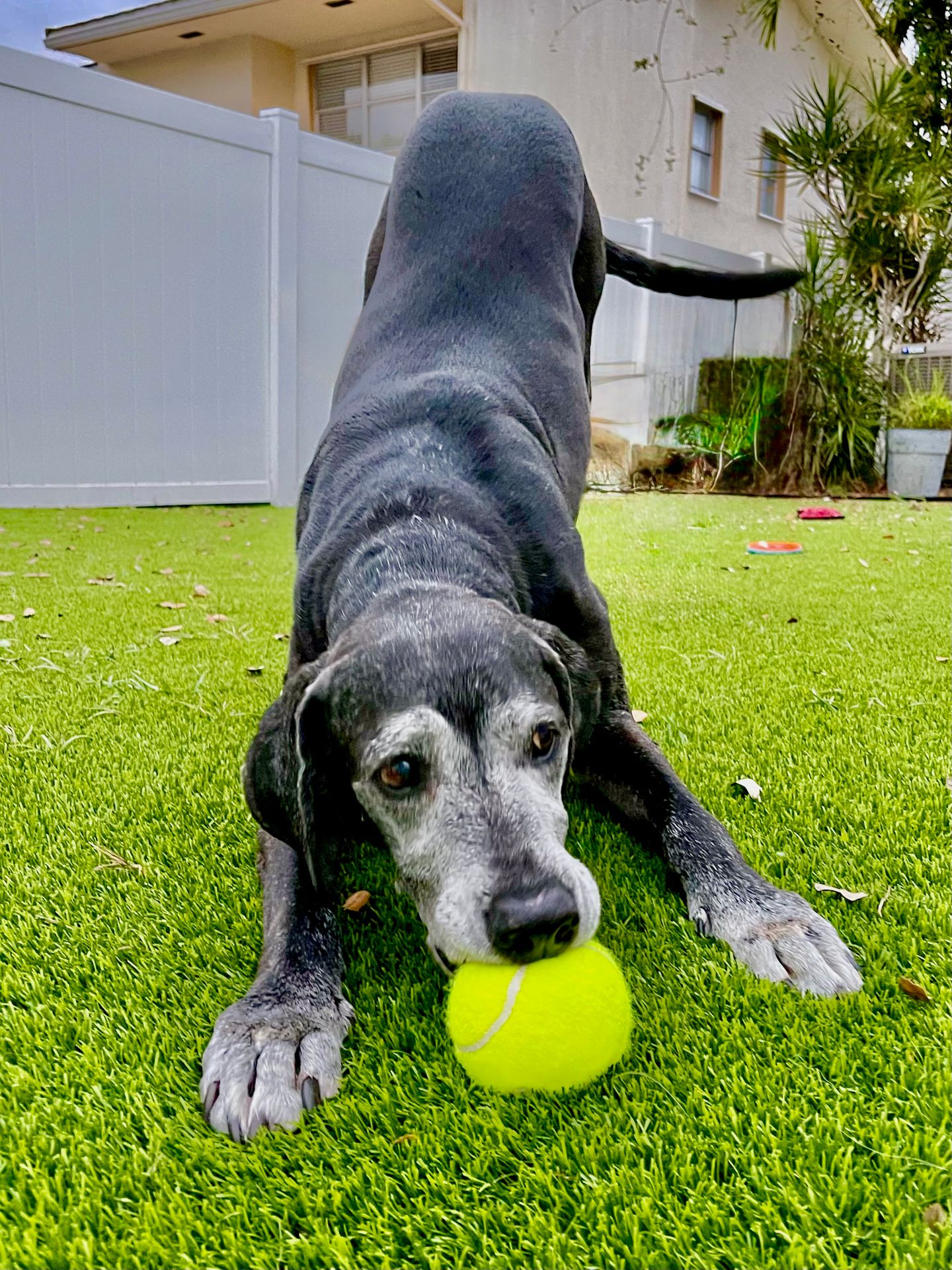
As dogs age, their needs change—but their ability to learn does not disappear. In fact, training can be one of the most valuable ways to support your senior dog’s physical health, mental stimulation, and overall quality of life.
At Evolutionary Dog Training, we often hear:
“Is my dog too old to train?”
The answer is simple: No.
But training an older dog does require a thoughtful, adjusted approach—one that prioritizes safety, comfort, and realistic expectations.
⸻
Understanding the Senior Dog
Senior and geriatric dogs may experience:
• Reduced mobility or arthritis
• Decreased vision or hearing
• Slower cognitive processing
• Lower stamina and quicker fatigue
• Increased sensitivity to stress or change
These changes don’t prevent learning—but they do influence how your dog should be trained.
⸻
Why Training Still Matters
Training isn’t just about obedience—it’s about maintaining function and confidence.
For older dogs, training can help:
• Improve mental sharpness and slow cognitive decline
• Maintain mobility through gentle, controlled movement
• Strengthen your communication and bond
• Reduce anxiety, confusion, or frustration
• Support daily routines (like polite leash walking or calm behavior at home)
Even simple skills can make a big difference in your dog’s comfort and independence.
⸻
Avoiding Injury: The Most Important Priority
When working with senior dogs, the goal is not to push limits—it’s to respect them.
Here’s how to train safely:
1. Keep Sessions Short
Aim for 3–5-minute sessions, 1–3 times per day.
Stop before your dog shows signs of fatigue.
2. Watch for Subtle Signs of Discomfort
Not all pain is obvious. Look for:
• Slowing down or hesitation
• Shifting weight or stiffness
• Avoiding certain movements (like sitting or lying down)
• Lip licking, yawning, or disengaging
If you notice these, pause and reassess.
3. Avoid High-Impact Movements
Skip:
• Jumping
• Sharp turns
• Fast repetitions
• Slippery surfaces
Instead, focus on slow, controlled, low-impact exercises.
4. Modify Positions
A traditional “sit” or “down” may be uncomfortable for some senior dogs.
Alternatives include:
• A “stand” instead of a sit
• A head turn or hand target instead of a full down
• Stationing on a comfortable mat
Function matters more than form.
5. Use Proper Surfaces
Train on:
• Non-slip flooring
• Grass or padded surfaces
Avoid tile or hardwood that can increase the risk of slipping.
⸻
Training Adjustments That Make a Difference
Go Slower
Give your dog more time to process cues and respond. Patience is key.
Simplify Communication
• Use clear, consistent cues
• Pair verbal cues with hand signals if needed
• Keep expectations predictable
Increase Reinforcement
Older dogs benefit from frequent encouragement. Reward effort—not just perfection.
Focus on Real-Life Skills
Prioritize behaviors that improve daily life:
• Calm leash walking
• Settling on a mat
• Coming when called (within safe distances)
• Cooperative care (nail trims, grooming, vet handling)
⸻
What Progress Looks Like
Progress with senior dogs may be more subtle—but it’s meaningful.
You might see:
• Improved confidence moving around the home
• Less anxiety during daily routines
• Better responsiveness to cues
• Increased engagement and interest
Success isn’t about speed—it’s about comfort, clarity, and quality of life.
⸻
When to Seek Professional Help
Working with a qualified trainer can make all the difference—especially for aging dogs.
Look for a trainer who:
• Uses positive reinforcement methods
• Has experience with senior or mobility-limited dogs
• Understands canine body language and pain signals
• Is willing to collaborate with your veterinarian
• Creates customized, in-home training plans
Avoid trainers who:
• Push physical limits
• Use force or corrections
• Expect uniform results from every dog
Your dog deserves a plan that adapts to them—not the other way around.
⸻
Supporting Your Senior Dog at Home
You play a critical role in your dog’s success.
Simple ways to help:
• Keep routines consistent
• Provide supportive surfaces (rugs, orthopedic beds)
• Maintain a healthy weight
• Communicate clearly and calmly
• Celebrate small wins
And most importantly—listen to your dog. They will tell you what they can handle.
⸻
It’s Never Too Late
Senior dogs may move a little slower, but they still want to engage, learn, and connect with you. Training gives them purpose, builds confidence, and helps them navigate aging with dignity.
At Evolutionary Dog Training, we specialize in meeting dogs where they are—especially as they age. With the right approach, your senior dog can continue to learn, adapt, and thrive.
⸻
Ready to Support Your Senior Dog?
If you’re looking for safe, personalized, in-home training designed specifically for your aging dog, we’re here to help.
Let’s create a plan that prioritizes your dog’s comfort, confidence, and quality of life—every step of the way.